AI for Everyone: The Guide You Wish You'd Had Sooner (Part 1)
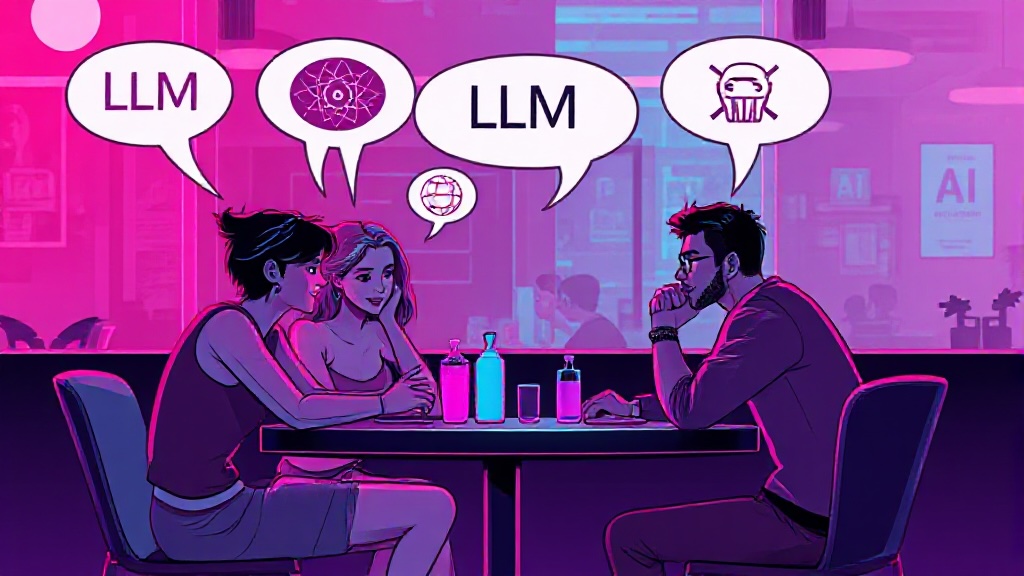
Today I had lunch with a group of friends, one of those lunches that starts at 1 p.m. and ends at 5, you know the kind? Between a forkful of carbonara and a sip of wine, the conversation drifted onto artificial intelligence. Someone said they used ChatGPT to write heart-wrenching love poems (yes, Marchetto, I’m talking about you), someone else insisted AI was basically black magic, and another was firing off terms like “Large Language Models” and “Machine Learning” as if casting Harry Potter spells.
It was at that moment, while I was trying to explain for the third time that no, AI is not Skynet and it won’t take over the world tomorrow, that I realized how much these concepts need clearing up. Because AI is making its way into our lives, like it or not, and it would be better to understand what we’re actually talking about, right?
So how about we bring some order to this chaos of acronyms and big words? I promise that by the end of this post, the next time someone at the bar starts talking about Transformers (no, not the Optimus Prime kind), you’ll know exactly what they’re on about.
LLM: The Digital Polyglot
Let’s start with Large Language Models, or LLMs as the geeks call them. Think of an LLM as a super-student who has read practically every book in the world. And when I say every, I mean EVERY: from Wikipedia to Shakespeare, from Reddit posts to cooking recipes. But unlike an ordinary student, this one doesn’t just memorize: it learns the patterns, the structures, the way words combine with each other.
It’s a bit like having a friend who has watched so many TV series that they can predict what will happen in the next episode. Not because they’re magic, but because they’ve learned how plots work. LLMs do the same thing with language: after “seeing” billions of examples of how people write and speak, they can produce texts that look like they were written by humans.
Transformer: The Master of Context
And this is where the Transformer comes in, which, despite the name, has nothing to do with Michael Bay’s robots. The Transformer is like that super-attentive teacher who, while reading an essay, takes the whole context into account. They don’t stop at the single sentence, but grasp the connections, the references, the overall meaning of the argument.
Imagine reading the sentence “The ball is round because it isn’t square”. Sounds silly, right? But our brain perfectly understands the concept “not square = round” because it understands the context, even while knowing, by the way, that a ball is actually spherical. Transformers do exactly this: instead of analyzing words one at a time like older AI systems did, they look at the whole context to grasp the real meaning of what they’re reading or generating.
Tokens and Tokenization: Breaking Things Down to Understand Them
When you hear about “tokens” and “tokenization”, think of a child learning to read. At first they don’t read whole words, but break them into syllables: “ta-ble”, “mom-my”, “dad-dy”. AI does the same thing, but instead of syllables it uses tokens.
A token can be a whole word, part of a word, or even a single character. It’s as if the AI had its own personal dictionary made of linguistic Lego bricks that it can combine in infinite ways. When you’re told that an AI model has a “context of 100,000 tokens”, it’s like saying it can keep 100,000 Lego pieces in mind at the same time to build what it’s saying.
Prompt Engineering: The Art of Talking to AI
Prompt Engineering is probably the most fun (and frustrating) part of interacting with AI. It’s like trying to explain something to a super-intelligent alien who takes everything literally. You have to be precise, clear, and sometimes a little creative.
It’s a bit like giving directions to someone who isn’t from your town. Saying “it’s down there on the right” isn’t enough: you have to be specific, give landmarks, anticipate possible confusion. It’s the same with AI: the clearer and more specific your prompt (the request you make to the AI), the better the results.
Fine-tuning: Teaching an Old Dog New Tricks
Fine-tuning is like sending an LLM on a specialization course. Imagine you have a general practitioner who knows a bit about everything: with fine-tuning, you send them off to specialize in cardiology. The base model stays the same, but it gets further trained on a specific dataset to become particularly good in a given field.
That’s what happens when companies take a general-purpose model like GPT and “specialize” it for specific tasks, such as answering customer support questions or analyzing legal documents.
Wrapping Up (For Now)
These are just the first basic concepts in the vast world of AI, but they’re essential for understanding everything else. In the next article we’ll talk about the different types of learning (Machine Learning, Deep Learning and friends), always keeping things simple and understandable.
In the meantime, if you’re wondering why I used so many analogies in this post, well, it’s because our brain works that way too: we learn new things more easily when we connect them to concepts we already know. And hey, if AI learns from patterns, why shouldn’t we?
P.S. If some AI expert is reading this post and thinking “but that’s an oversimplification!”, they’re right. But as Einstein said: “If you can’t explain something simply, you don’t understand it well enough”.