AI for Everyone: Architectures and Artificial Brains (Part 3)
“So does AI have a brain, then?” That’s the question one of my fellow diners asked me (if you don’t know what I’m talking about, read part one). And you know what? It’s not as silly a question as it might seem. In fact, it takes us straight to the heart of how modern AI systems actually work.
Neural Networks: The Great Digital Orchestra
Imagine a symphony orchestra. Each musician (like a neuron) knows how to play their own instrument, but it’s only when they all play together, following a score and a conductor, that they create something magical. Neural networks work in a similar way: they’re made up of lots of artificial “neurons” which, just like musicians, work together to create something greater than the sum of its parts.
I was trying to explain this to my friend Francesco, who’s a chef. “It’s like your kitchen,” I told him. “Every cook has a specific job - someone handles the pasta courses, someone the mains, someone the desserts. But it’s only when you all work together, passing information along and coordinating, that you manage to serve an entire menu”.
The Attention Mechanism: Perfect Multitasking
If neural networks are the orchestra, the attention mechanism is the conductor. You know when you’re at a crowded party but you still manage to focus on your conversation with one specific person, even though there’s a ton of noise around you? Well, the attention mechanism works more or less like that.
It’s like when your dog manages to completely ignore your commands but can hear the rustle of the kibble bag from three rooms away. It knows exactly what to pay attention to! Modern AI systems do the same thing: out of all the available information, they focus on what’s most relevant to the task at hand.
Embeddings: The Map of Meaning
Embeddings are perhaps one of the most fascinating (and hardest to explain) things in modern AI. Think of a huge library where every book has specific coordinates in space, and similar books are close to each other. Embeddings do something similar with words and concepts.
It’s as if we took all the words in the dictionary and arranged them in a multidimensional space where “cat” is close to “feline” but far from “carburetor”. When the AI needs to understand the meaning of something, it consults this “map” to find relationships and similarities.
Foundation Models: The Giants We Build On
Foundation Models are a bit like skyscrapers: huge structures that serve as a base for building other things. GPT, BERT, and other similar models are like skyscrapers of knowledge on which we can build specific applications.
It’s like learning your native language as a child: once you have the basics of the language (your personal “foundation model”), you can specialize in anything, from poetry to quantum physics. In the same way, these models provide a base of language understanding that can be specialized for specific tasks.
Diffusion Models: The Digital Artists
And then there are Diffusion Models, the true artists of the AI world. If you’ve ever used DALL-E or Midjourney, you’ve interacted with a Diffusion Model. The way they work is fascinating: imagine an artist who first “scrambles” an image and then learns to “unscramble” it in new and creative ways.
It’s like when, as kids, you took your LEGO, completely dismantled a build and then used the same pieces to create something entirely new. Diffusion Models do something similar with images: they learn to deconstruct and reconstruct them in innovative ways.
How It All Fits Together: The AI Ecosystem
All these components - neural networks, attention mechanisms, embeddings, foundation models and diffusion models - work together like the different departments of a well-organized company. Each one has its specific role, but it’s their collaboration that makes the magic of modern AI possible.
To get back to the question from the opening: no, AI doesn’t have a brain like ours. It has something different, something unique. It’s neither better nor worse than the human brain - it’s simply different. And maybe it’s exactly this difference that makes it so interesting and useful.
Conclusion: The Hidden Complexity
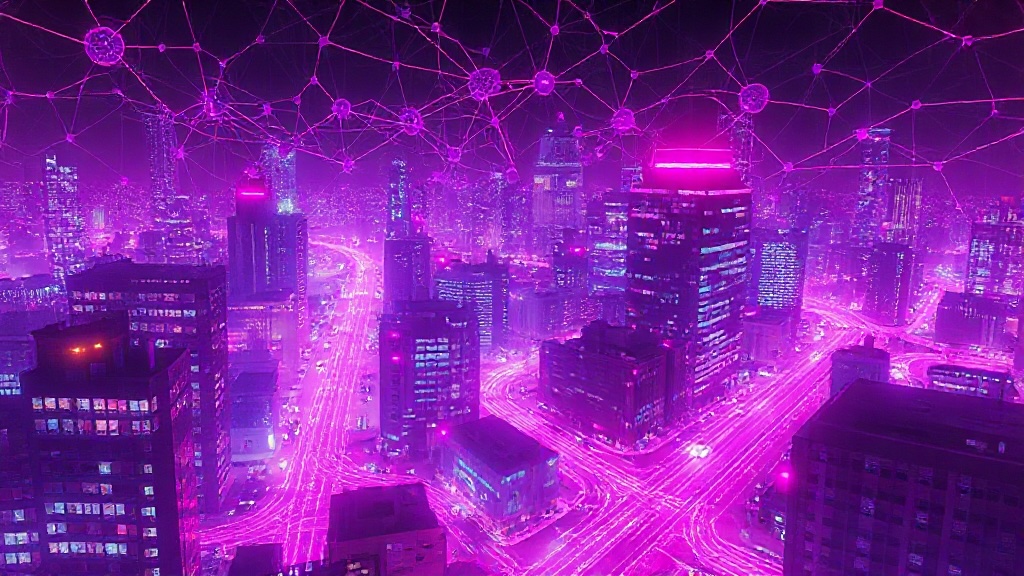
The real magic of modern AI isn’t in the individual components, but in the way they work together to create systems that can understand language, generate images, and solve complex problems. It’s like a city: from a distance it looks like a single entity, but up close you discover it’s made of thousands of different elements working together in perfect harmony.
In the next article we’ll talk about the specific techniques these architectures use to learn and improve - from Chain of Thought to Few-shot Learning. But that’s another story, which I’ll tell you next time.
P.S. If you’ve concluded that AI is “like a brain made of LEGO”, maybe that’s not such a bad definition after all!